
 RU
RU KZ
KZ EN
ENArchitecture design
Translating business and technical requirements into an implementable target architecture, including HLD/LLD where appropriate.
Discuss a project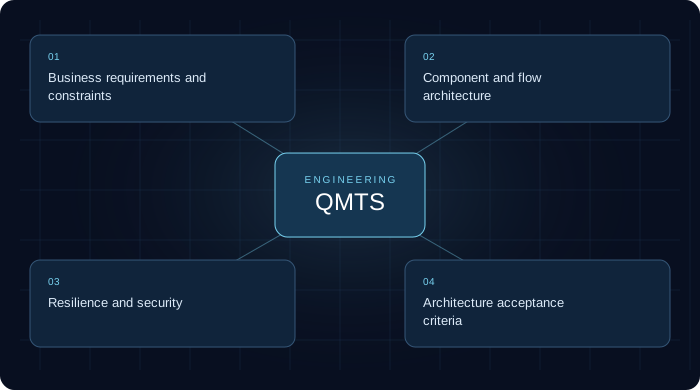
What it is
Solution design defines how components interact: topology, addressing, routing, security zones, resilience, interfaces, capacity and operational boundaries.
Why it matters
It gives stakeholders a shared technical blueprint before procurement and deployment begin, reducing compatibility issues and costly changes during implementation.
What shapes the design
- Business requirements and constraints
- Component and flow architecture
- Resilience and security
- Architecture acceptance criteria
QMTS delivery scope
We develop the target architecture, High-Level Design (HLD) and, where required, Low-Level Design (LLD), define interfaces and dependencies, and validate the design against requirements.
Customer deliverables
An approved solution architecture with diagrams, design decisions, assumptions, dependencies and implementation requirements.
Typical use cases
New infrastructure, multi-vendor integration, network modernization, data-center projects, cloud connectivity and complex enterprise deployments.
Delivery lifecycle
- 01 Requirements discovery and current-state assessment.
- 02 Architecture, dependencies and implementation planning.
- 03 Technical specification, configuration baseline and delivery preparation.
- 04 Implementation, integration, testing and controlled commissioning.
- 05 As-built documentation, operational handover and managed support where required.
Before we start
To scope a project, describe the goal, users and sites, current systems, timing constraints and desired outcome. Solution scope and service terms are defined after assessment.
Start with your challenge
Tell us what you need to build, connect or improve. An idea, a list of issues or a technical brief is enough to start.
Support coverage and SLA parameters are agreed for each project.
Discuss a project
Leave an email address or phone number so we can respond.