
 RU
RU KZ
KZ EN
ENSite connectivity: L2/L3 VPN
Private carrier services that extend Ethernet or routed IP connectivity between geographically separated business locations.
Discuss a project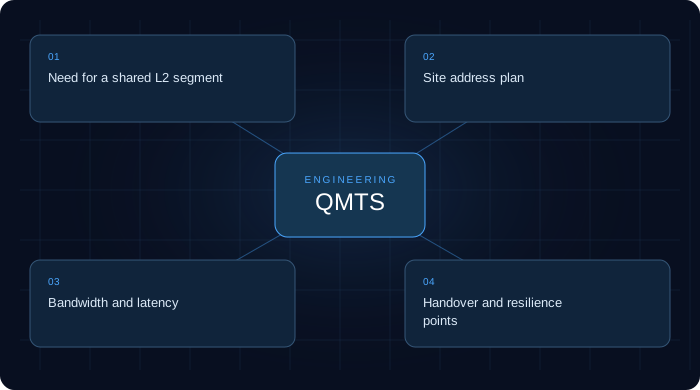
What it is
An L2 VPN extends Ethernet connectivity between sites, while an L3 VPN provides routed IP connectivity through the service provider network.
Why it matters
The choice affects routing control, broadcast domains, scalability and how much responsibility remains with the customer versus the carrier.
What shapes the design
- Need for a shared L2 segment
- Site address plan
- Bandwidth and latency
- Handover and resilience points
QMTS delivery scope
We select the appropriate service model, define addressing and routing, coordinate carrier handoffs, configure edge devices and test site-to-site communication and failover.
Customer deliverables
A working private inter-site network with documented topology, routing boundaries, handoff parameters and acceptance results.
Typical use cases
Branch interconnection, data-center connectivity, campus extension, migration projects and private access between critical business locations.
Delivery lifecycle
- 01 Requirements discovery and current-state assessment.
- 02 Architecture, dependencies and implementation planning.
- 03 Technical specification, configuration baseline and delivery preparation.
- 04 Implementation, integration, testing and controlled commissioning.
- 05 As-built documentation, operational handover and managed support where required.
Before we start
To scope a project, describe the goal, users and sites, current systems, timing constraints and desired outcome. Solution scope and service terms are defined after assessment.
Start with your challenge
Tell us what you need to build, connect or improve. An idea, a list of issues or a technical brief is enough to start.
Support coverage and SLA parameters are agreed for each project.
Discuss a project
Leave an email address or phone number so we can respond.